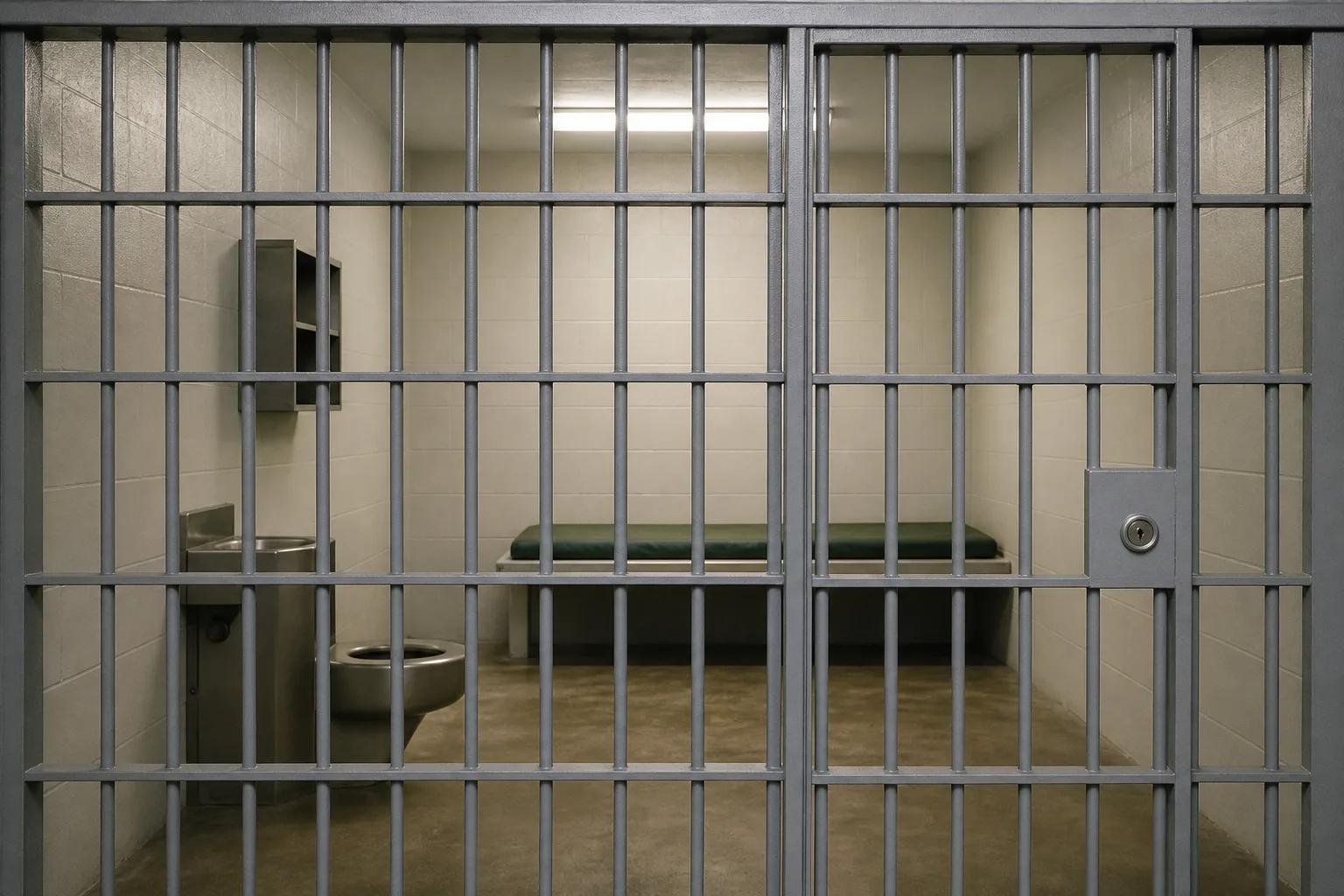
Most of this plays out in a county jail phone booth, a courthouse hallway and a small office where the fee agreement gets signed
The call usually comes to a sister, a mother, or a spouse, at an hour when nothing useful is open, and it contains almost no information: a name, a county jail, a number to call back. Within seventy-two hours somebody in that family will have promised money to a lawyer, often several thousand dollars, sometimes on a credit card, occasionally before anyone knows what charge has been alleged. That decision gets made under the worst possible conditions. It helps to know, before the phone rings, what actually happens in those three days and which parts of it a paid attorney can move.
Booking and magistration happen whether you hire anyone or not
After an arrest in a Texas county, the person is booked into the jail: property inventoried, fingerprints and photograph taken, a jail identification number assigned. Within forty-eight hours a magistrate has to read the accused their rights, tell them what they are accused of, and set a bond. That hearing, often called magistration or an Article 15.17 hearing, is short, frequently conducted by video, and in most counties it happens without defense counsel present. No amount of money spent on Friday night changes whether it occurs or when. What money can occasionally change is whether anyone shows up afterward to ask the court to reconsider the number the magistrate wrote down.
That distinction matters because families routinely pay a premium believing they are buying speed at a stage where speed is not for sale. The clock runs on its own. What a retained lawyer buys at this point is a phone call to the jail, a set of accurate answers about what happens next, and, in a county where the docket allows it, a bond reduction motion filed within days rather than weeks. Those are real services. They are just narrower than the pitch sometimes suggests, and knowing the boundary keeps the first payment proportionate.
Bond is the first place cost gets confusing
Bond is not attorney's fees, and the two get blurred constantly in the first day. A surety bond through a bail bondsman typically costs a nonrefundable percentage of the bond amount, and that percentage is gone regardless of how the case ends. A cash bond posted directly with the county may be returnable at the end of the case, subject to fees and to whatever the court applies it toward. Some defendants qualify for a personal bond with no money down and conditions attached. A family that spends its available cash on a bondsman's fee at two in the morning has less to spend on defense at nine the next morning, and that sequencing decision is rarely made deliberately.
Ask the bondsman what the fee is, whether it is refundable, and what the conditions of release require, then ask the same about any collateral. Those three answers take four minutes and they shape everything after. If the goal is getting someone out of custody before the weekend, a bondsman solves that. If the goal is the best long-run outcome on the charge, the attorney fee is the larger and less reversible commitment, and it deserves more scrutiny than it usually gets.
The filing decision belongs to the district attorney
An arrest is a police decision. A charge is a prosecutor's decision, and the two are not the same event. After the arrest, the case goes to the district attorney's office, which reviews the offense report and decides whether to accept the charge as written, reduce it, refuse it outright, or send it to a grand jury. That review can take days on a misdemeanor and months on a felony. During that window a defense lawyer can submit a packet: employment records, treatment enrollment, witness statements, video the arresting agency did not gather. Whether the prosecutor reads it is discretionary. Whether it exists at all depends entirely on somebody being hired early enough to build it.
This is the strongest argument for hiring quickly, and it is a genuine one, but it is an argument about work product, not about urgency for its own sake. When a family asks about representation in a county like Johnson County, firms that handle these matters locally, including Criminal Defense Attorneys practicing regularly in that courthouse, can usually say plainly whether a pre-filing packet is realistic on the particular facts. If the answer is no, the case simply waits, and paying more on day two buys nothing that paying the same amount on day twenty would not.
The first setting, and what the fee is really covering
Once a charge is filed, the case gets a cause number, lands in a specific court, and receives a first setting. That appearance is often brief: announcements, a discovery packet, a reset. Nothing dispositive typically happens. Case processing in state courts is the kind of thing the Bureau of Justice Statistics is responsible for tracking nationally, and the ordinary rhythm is far slower than the panic of the first weekend implies.
So when quotes for the same arrest range from two thousand dollars to fifteen, the spread is not describing the same product. Ask what the fee covers: pre-filing work, all pretrial settings, motions, a plea, a trial, or some subset with trial billed separately. Ask what happens to the money if the district attorney refuses the case in week three. Ask who appears at the settings. Get those answers in writing.
The seventy-two hours are real, but the pressure inside them is mostly about custody, not about defense. Separate those two problems, solve the custody one first, and the fee conversation gets far easier to hold steadily.